C4 Filling Machine Introduction
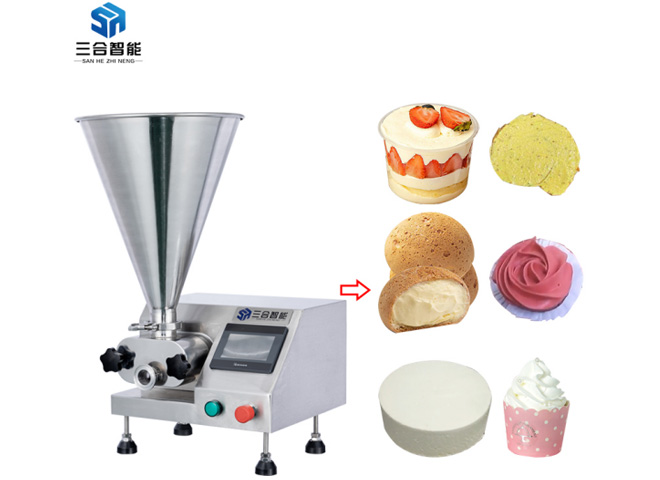
Small filling machine, also known as small liquid filling machine, is a kind of mechanical equipment used for precise filling of fluid material, which is widely used in food, pharmaceutical, chemical and other industries. With its simple design and easy operation, it is especially suitable for small production sites and scenarios that require manual or semi-automatic operation.
I. Working Principle
The working principle of a small filling machine is based on three key steps: conveying, metering and filling of the fluid material. Firstly, the fluid material is transported through a conveying system onto the table of the filler. The fluid material is then accurately metered by a dosing device to ensure that the weight or volume of fluid material in each container meets a preset standard. The metering device is usually a load cell or volumetric device. Next, the filler utilize a filling nozzle to perform the filling operation. The filler nozzle is the heart of the filling machine and is used to accurately fill the container with fluid material through an up and down or rotating motion.
II. Structural characteristics
The structure of small filling machine is relatively simple, mainly including conveying system, measuring device, filling nozzle and control system and other parts. The conveying system is responsible for conveying the fluid material to the working table, controlling the discharging speed to measure the fluid material, the filling nozzle is responsible for filling the fluid material into the container, and the control system is responsible for monitoring and regulating the filling process. In addition, small fillers are usually equipped with auxiliary devices such as power switches and vibration adjustment knobs to facilitate operation and maintenance.
Conveyor system: Usually by conveyor belt or manually, it is used to convey the fluid material from the storage hopper to the working table.
Filling nozzle: Driven by conveyor belt to fill the fluid material into the container. The design and trajectory of the filling nozzle have a significant impact on the filling accuracy.
Control system: Used for infrared detection and regulation of the filling process, to achieve the regulation of filling speed, filling nozzle lifting and rotation and other functions.
III. The application field
Single-nozzle filling machine is widely used in many fields due to its advantages of easy operation and affordable price.
Food industry: Used for filling liquid or semi-fluid materials such as fruit juice, beverage, flavouring and so on.
Pharmaceutical industry: Used for filling capsules, powder, oral liquid and other drugs.
Chemical industry: Used for filling various chemical reagents, lubricants and other liquid materials .
IV. Operation and Maintenance Methods
Operation method
Press the green button in the ‘power switch’ to turn on the power.
Place the container under the filling nozzle and start the filling operation.
When filling is completed, remove the container and proceed to the next round of operation.
Maintenance
Clean and maintain the filling machine regularly to ensure hygiene.
Check the looseness of the internal parts of the machine and tighten them in time.
Replace wearing parts, such as conveyor belt, metering sensor, etc. regularly.
Conduct a thorough inspection of the equipment before operation to ensure normal working condition.
Operation should be carried out in accordance with the requirements of the manual, do not change the equipment settings at will.
V. The market common models and prices
There are a variety of common single-nozzle filler models on the market, with prices varying by brand, configuration and performance. The following are some common models and price range:
Manual small filling machine: Affordable, simple to operate, suitable for small production sites and outpatient clinics and other scenarios.
Automatic small filling machine: Higher degree of automation, can automatically complete the whole operation process in a set time. The price is relatively high, usually between ten thousand and tens of thousands of dollars.
VI. Market Trends and Development Prospects
With the progress of science and technology and the development of the industry, the small filling machine is developing in the direction of automation, intelligence and multi-functionality. In the future, the small filling machine will pay more attention to the simplicity of operation, accuracy and stability to meet the diversified needs of different industries for fluid filling.
Increased automation: through the introduction of advanced control systems and sensor technology, more accurate metering and filling operations can be achieved.
Intelligent upgrading: using the IoT and big data technology to realize remote monitoring and fault warning of the equipment, improving the reliability and maintenance efficiency of the equipment.
Multifunctional development: develop single-nozzle filling machines with special functions for the needs of different industries, such as filling machines with stirring function, filling machines with heating or cooling function.
VII. Conclusion
As an important fluid filling equipment, small filling machine plays an important role in many fields such as food, medicine and chemical industry. With its simple working principle, compact structure and convenient operation, it is especially suitable for small production sites and scenarios requiring manual or semi-automatic operation. With the progress of science and technology and the development of the industry, the small filling machine will be constantly upgraded and improved to meet the diversified needs of different industries for fluid material filling. In the future, small filling machines will make greater breakthroughs and development in automation, intelligence and multi-functionality.
Related To Recommend
-
 Paste Pump: A Powerful Tool to Efficiently Solve Material Transportation Problems
Paste Pump is a conveying equipment widely used in pharmaceuticals, medical equipment, food, chemical industry and other fields.
-
Hamburger Cutting Machines
Hamburger cutting machines are indispensable equipment in the modern food processing industry.
-
Automatic Side Injecting Machine
With the development of society, people’s demands for food are increasingly diversified and sophisticated.
-
Cake Cutting Machine
Cake cutting machine, as an important equipment in the baking industry and food processing field, has brought revolutionary changes to cake making and processing with its efficient and precise cutting capabilities.
-
Heating Blender
As a multifunctional food processing equipment, heating machines come in many types to meet the needs of different food processing scenarios.
-
Vertical Batter Pump
In modern industrial production, automation and intelligence have become the key ways to improve production efficiency, reduce labor costs, and ensure product quality.
-
The Role and Future Prospects of Automatic Side Injecting Machines
The Automatic Side Injecting machine is an automated equipment specially used to fill cream,chocolate and other fillings into the cake shell.
-
The Introduction of Piston Filling Machine of Cake
The piston filling machine is an advance equipment which specially designed for cake industry.
-
Cake Dessert Decoration Machine
In the baking industry, the making of cakes and desserts is not only an art, but also a technology that requires high precision and efficiency.
-
High Capacity Heating Blender
Applied to chocolate melting, ice cream stirring and mixing, pastry and mousse raw materials stirring and mixing.