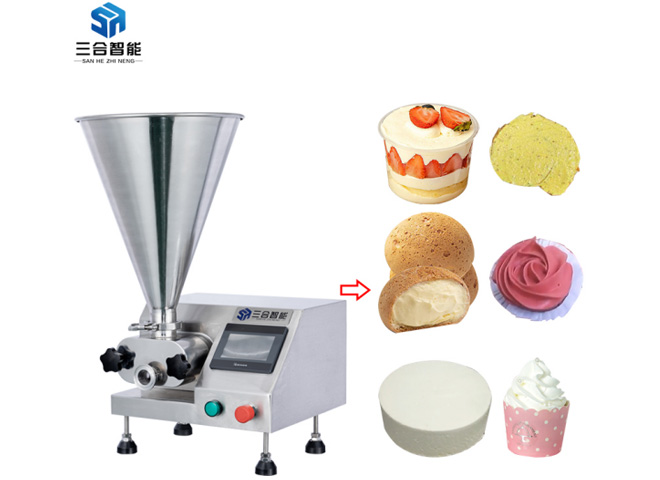
Working Principles of Bakery Injecting Machines
Bread injecting machine is a type of equipment used in the baking industry to inject fillings or additives into bread products. It is designed to automate the process of adding fillings such as creams, jellies, sauces, or other ingredients into bread dough or baked bread. Bakery injecting machines have revolutionized the bread production industry by automating the process of adding fillings and additives to bread products. These machines offer precise and controlled distribution of fillings, ensuring consistency in taste, texture, and visual appeal.
SanHe injecting machines are commonly used in commercial bakeries or large-scale bread production facilities to enhance the taste, texture, and visual appeal of bread products. They allow for precise filling placement, improve production efficiency, and enable the creation of a wide variety of filled bread products.
Working Principles of Bakery Injecting Machines
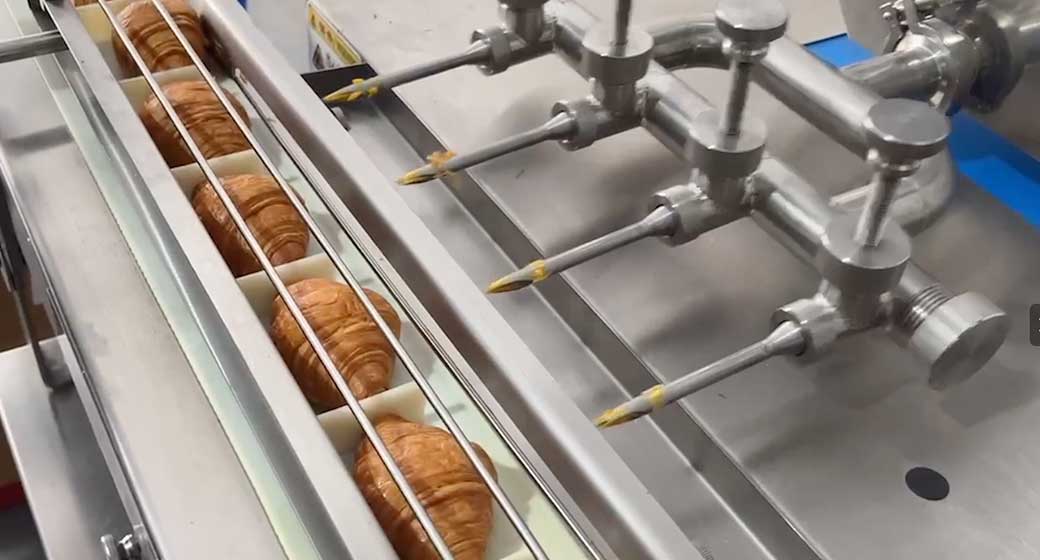
Bakery injecting machines operate on the principle of injecting fillings into bread products. The machines consist of a conveyor system that transports the bread products through a series of nozzles or needles. These nozzles or needles are connected to a reservoir or hopper containing the desired filling. As the bread passes through the machine, the nozzles or needles inject the filling into the bread, resulting in evenly distributed and precisely placed fillings.
Bakery injecting machines feature a conveyor system that transports the bread products through the machine. The conveyor moves the bread steadily and consistently, ensuring a smooth and continuous process. The nozzles or needles are connected to the reservoir or hopper, allowing the filling to flow from the storage area to the injection points. The filling is typically in a liquid or semi-liquid form, ensuring ease of injection. As the bread products move along the conveyor system, they pass beneath the nozzles or needles. These nozzles or needles are positioned strategically to penetrate the bread products at the desired injection points. Bakery injecting machines often provide adjustment options for controlling the amount of filling injected and the injection pressure. In a word, These adjustments allow bakers to customize the filling quantity and distribution to meet specific product requirements.
How Does Bakery Injecting Machines Enhance Efficiency?
Automation: Bakery injecting machines automate the filling process, reducing the need for manual labor. Instead of relying on individuals to manually inject fillings into each bread product, the machine takes over this task. This automation eliminates human error, reduces labor requirements, and allows bakery staff to focus on other important tasks.
Speed and Throughput: Bakery injecting machines are designed for high-speed operation. They can inject fillings into bread products at a much faster rate compared to manual methods. This increased speed improves production throughput, enabling bakeries to produce a larger quantity of filled bread products within a given time frame.
Consistency and Accuracy: These machines ensure consistent and accurate filling distribution. The precise injection mechanism of bakery injecting machines ensures that each bread product receives the same amount of filling, eliminating variations in the final product. This consistency enhances quality control and customer satisfaction.
Versatility: Bakery injecting machines offer versatility in terms of the types of fillings they can handle. They can accommodate various fillings such as creams, jellies, sauces, or even multiple fillings in the same product. This versatility allows bakeries to create a wide range of filled bread products, catering to diverse consumer preferences and expanding their product offerings.
Waste Reduction: Bakery injecting machines minimize filling waste by delivering precise and controlled amounts of filling into each bread product. Unlike manual methods that may result in uneven or excessive filling, these machines ensure efficient utilization of fillings, reducing waste and optimizing ingredient costs.
Increased Production Capacity: By automating the filling process, SanHe injecting machines enable bakeries to scale up their production capacity. The streamlined and efficient operation of these machines allows for higher output levels, meeting increased market demand without compromising product quality.
Time Savings: With bakery injecting machines, the filling process is significantly faster compared to manual methods. This time-saving advantage translates into shorter production cycles and quicker turnaround times. Bakeries can produce more filled bread products in less time, improving overall operational efficiency.
Furthermore, bakery injecting machines have significantly improved production efficiency. The automation of the filling process reduces the time and labor required, allowing bakeries to streamline their operations and increase output. This increased efficiency benefits both producers and consumers. Producers can meet higher demands and ensure a steady supply of products, while consumers can enjoy fresh and consistently filled bread.
Additionally, bakery injecting machines have enhanced product quality and consistency. SanHe injecting machines are renowned for our ability to maintain superior product quality. The precise injection process ensures accurate and controlled filling distribution, minimizing product defects and waste. By consistently delivering high-quality filled bread products, your bakery will gain a reputation for excellence and attract more customers. SanHe Injecting Machines enable you to deliver a truly memorable culinary experience. By eliminating human error in the filling process, these machines deliver uniform distribution of fillings, ensuring that each slice or bite of bread offers a consistent flavor experience. This reliability builds consumer trust and loyalty, as they can expect the same high-quality product with each purchase.
Related To Recommend
-
 Paste Pump: A Powerful Tool to Efficiently Solve Material Transportation Problems
Paste Pump is a conveying equipment widely used in pharmaceuticals, medical equipment, food, chemical industry and other fields.
-
C4 Filling Machine Introduction
Small filling machine, also known as small liquid filling machine, is a kind of mechanical equipment used for precise filling of fluid material, which is widely used in food, pharmaceutical, chemical and other industries.
-
Hamburger Cutting Machines
Hamburger cutting machines are indispensable equipment in the modern food processing industry.
-
Automatic Side Injecting Machine
With the development of society, people’s demands for food are increasingly diversified and sophisticated.
-
Cake Cutting Machine
Cake cutting machine, as an important equipment in the baking industry and food processing field, has brought revolutionary changes to cake making and processing with its efficient and precise cutting capabilities.
-
Heating Blender
As a multifunctional food processing equipment, heating machines come in many types to meet the needs of different food processing scenarios.
-
Vertical Batter Pump
In modern industrial production, automation and intelligence have become the key ways to improve production efficiency, reduce labor costs, and ensure product quality.
-
The Role and Future Prospects of Automatic Side Injecting Machines
The Automatic Side Injecting machine is an automated equipment specially used to fill cream,chocolate and other fillings into the cake shell.
-
The Introduction of Piston Filling Machine of Cake
The piston filling machine is an advance equipment which specially designed for cake industry.
-
Cake Dessert Decoration Machine
In the baking industry, the making of cakes and desserts is not only an art, but also a technology that requires high precision and efficiency.